
When a tooth is lost, it is not just the look of the smile that suffers: chewing, speech and bone health are also affected. Dental implantology offers a durable, stable solution to restore the teeth naturally, while preserving the balance of the face and the health of the jaw.
What is a dental implant?
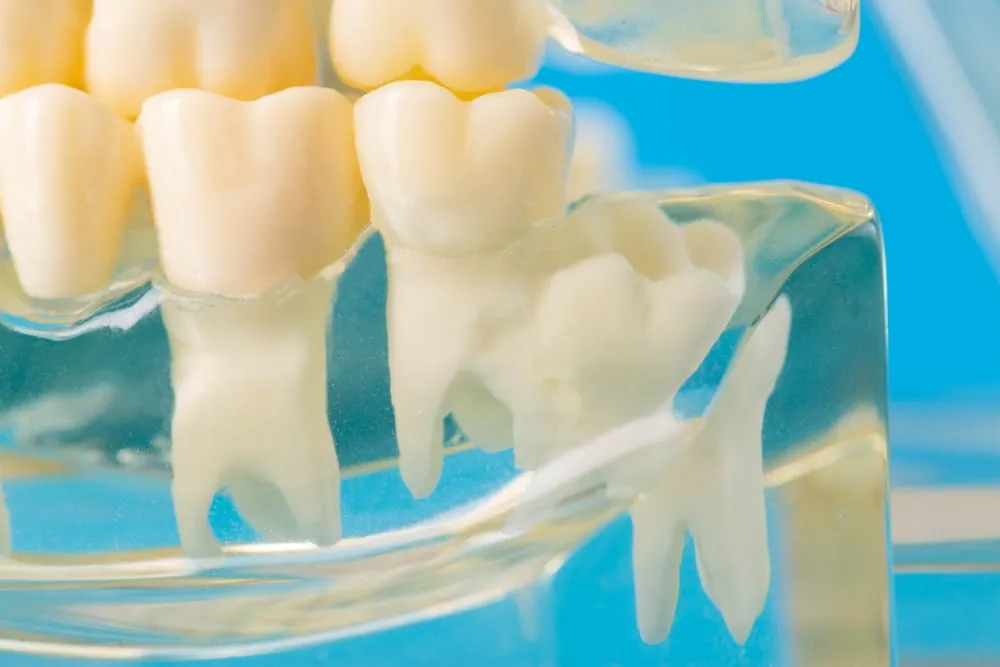
A dental implant acts as an artificial root, usually made of titanium, placed in the jawbone to support a restoration (crown, bridge or denture). Once in place, it bonds firmly with the bone through a process called osseointegration — a biological fusion that ensures stability and strength.
This complete integration is what sets implants apart from other solutions: the implant becomes an integral part of the mouth, providing a base as solid as a natural root.
Why choose implantology?
Implants are now the standard for tooth replacement, for their comfort as much as their durability.
Unlike a traditional bridge, an implant does not require shaping the neighbouring teeth, which preserves them. It also stimulates the alveolar bone, preventing the gradual bone loss that commonly follows the loss of a tooth when the root is no longer there.
Among the most notable advantages:
- Strength and stability: comparable to those of a natural tooth.
- Preserving the jaw: the implant stimulates the growth of new bone cells, preventing loss of bone volume.
- Natural look and feel: implants look and function very much like natural teeth.
- Easy care: simply brush and floss as before.
- Long lifespan: implants can last for decades with proper follow-up.
Options depending on how many teeth need replacing
- Implant crown
Recommended when a single tooth is missing, the implant crown replaces both the root and the visible tooth. The result is attractive, stable and blends in perfectly with the rest of the teeth. - Implant bridge
When several consecutive teeth are missing, a bridge attached to two implants restores the area without relying on the neighbouring natural teeth. This approach is very strong and provides chewing comfort comparable to natural teeth. - Implant-supported partial denture
If several teeth are missing but some remain, a partial denture stabilized on 2 or 4 implants holds very well. It reduces the irritation and movement often seen with removable dentures. - Implant-supported complete denture
When all the teeth are missing, a complete denture fixed on several implants (often four to six depending on the jaw) gives you back a fixed, stable smile. This type of restoration greatly improves comfort, chewing and everyday confidence.
What to consider before implant treatment
Implantology is a highly reliable solution, but it must be adapted to each patient’s condition. Before starting treatment, the dentist assesses:
- The health of the gums and the quality of the jawbone;
- General health, especially conditions that can affect healing (diabetes, smoking, etc.);
- The patient’s cosmetic and functional expectations;
- The maintenance plan, essential for the longevity of the implants and oral health.
- The budget, since implant treatment is a larger, but lasting, investment.
A lasting solution to regain comfort and confidence
Dental implantology is an investment in long-term health and well-being. By replacing missing teeth with implants, it is possible to preserve the function, appearance and health of the whole mouth.
If you are considering treatment to restore your smile, the team at Centre dentaire Ethier & Nadeau can recommend an implant solution perfectly suited to your needs.