
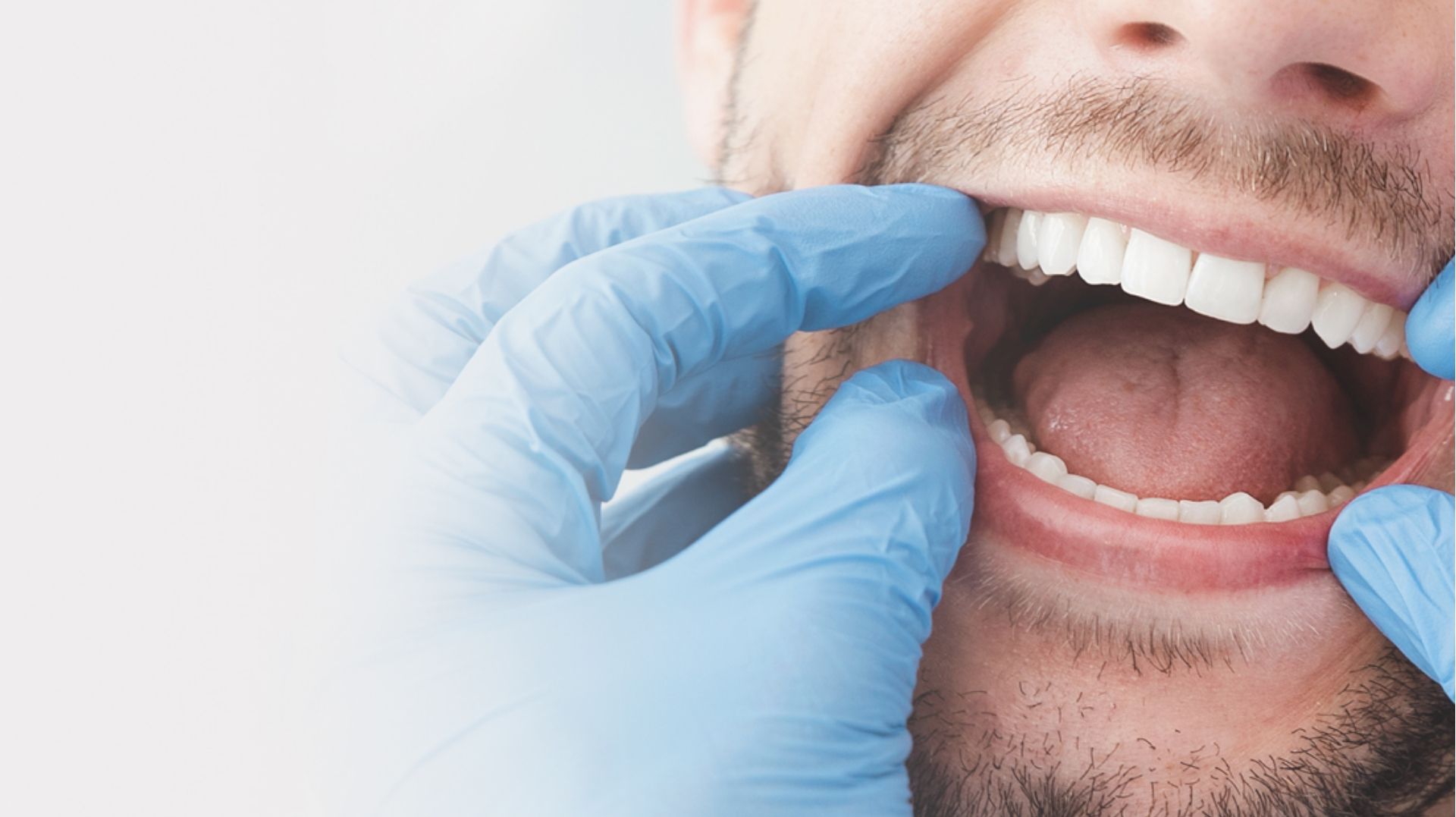
Gum recession: what is it?
Gum recession is a gradual, though sometimes very rapid, pulling back of the gums from the roots of the teeth. It usually results from periodontal disease (periodontitis) that was not properly treated. Bacteria then get under the gums, attack them and, over time, break them down. Other factors, such as heredity and anatomy (thin gums), bruxism, oral piercings and poor brushing technique, can also contribute to gum recession. In every case, it is a condition that should be corrected with a gum graft to avoid several problems.
Gum grafts: a procedure in a few steps

Assessment
At a first appointment, your dentist assesses your needs and discusses treatment options. A surgical plan (areas to treat, number of procedures needed, etc.) is drawn up.
Preparation
Local anesthesia is given, then the treated area is scaled so that bacteria do not contaminate it.
The graft
The dentist takes a piece of connective tissue from the patient’s palate.
The transfer
The graft is placed and stitched in the chosen spot (on the gum or over an exposed root).
Healing
Over the following weeks, the grafted tissue fuses with the gum, which gradually regains strength and a healthy appearance.
Gum grafts: a surgery with good results
Although it is a surgery, a gum graft is a fairly minimally invasive procedure. It usually goes smoothly and recovery requires few changes to your daily habits. Your dentist in Saint-Eustache will also guide and advise you so that the procedure (two or three appointments are sometimes needed for a complete treatment) goes as well as possible!