
Cleaning: an essential part of the routine visit
Cleaning is the other part of the routine visit, the cornerstone of preventive dentistry. You could even say that cleaning is a preventive treatment in itself, separate from the exam that comes with it. This step, carried out by the dental hygienist with specialized instruments, goes a long way towards controlling and preventing diseases such as cavities and gum infections. It removes all the residue, rough spots and deposits left on the teeth and other surfaces of the mouth, even if you have a good home hygiene routine. Cleaning is especially useful for removing plaque and tartar, two enemies of oral health.
The difference between plaque and tartar
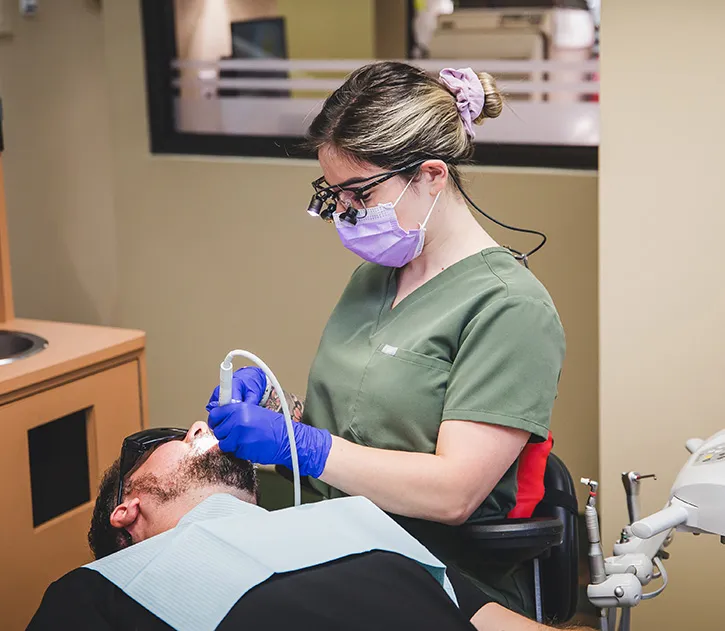
- Plaque: A thin, yellowish-white film that forms naturally on the teeth. It is made up of saliva, food residue and bacteria. Brushing and flossing remove it, but this bacterial deposit still tends to build up near the gums. Bacterial plaque can then turn into tartar.
- Tartar: A calcified form of plaque. Unlike plaque, it cannot be removed with a good hygiene routine. That takes careful scaling. A buildup of tartar can cause gum inflammation (gingivitis), or even a more severe periodontal disease (periodontitis).
Two steps for a complete, effective cleaning
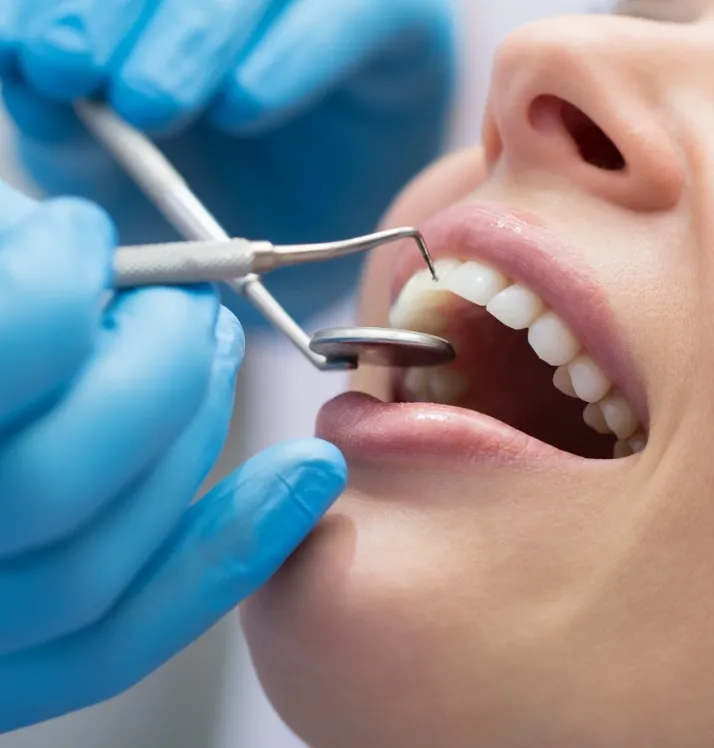
Cleaning is done in two steps that leave the teeth clean and healthy: scaling and polishing. In the first step, your dental hygienist in Saint-Eustache removes the tartar that has built up along the gum line. To do so, she uses a pointed instrument (manual or ultrasonic) and water to scrape, then remove, rough spots and plaque. She then completes the cleaning by polishing with a rotating rubber-tipped tool and a concentrated cleaning paste. With this tool, she removes all the debris and deposits left on the teeth. Not only does this leave a smooth, shiny finish, it also keeps plaque from sticking to remaining rough spots.
Cleaning: an unexpected treatment for the gums

Plaque and tartar buildup is the leading cause of gum disease. These bacterial deposits tend to grow and cluster where the teeth meet the gum tissue. Bacteria can then easily attack the gum, and even get into it and damage the tooth foundations (periodontal structures). By removing plaque and tartar, cleaning controls these bacterial attacks and helps keep gums healthy.