

Inlays: when are they used?
Inlays, which come in two main types (inlays and onlays), are small custom-made ceramic restorations. They are mainly used to repair a decayed or weakened tooth. They are used when the cavity is too deep or wide to be treated the usual way, that is, by filling it after cleaning out the infected area. Although smaller than a crown, an inlay also strengthens the tooth and evens out its appearance. The type of inlay chosen depends on where and how the decay has spread. The restoration can be made with the traditional technique, which takes two appointments, or with CEREC technology, which makes it possible to complete it in a single visit.
Inlays for a range of repairs
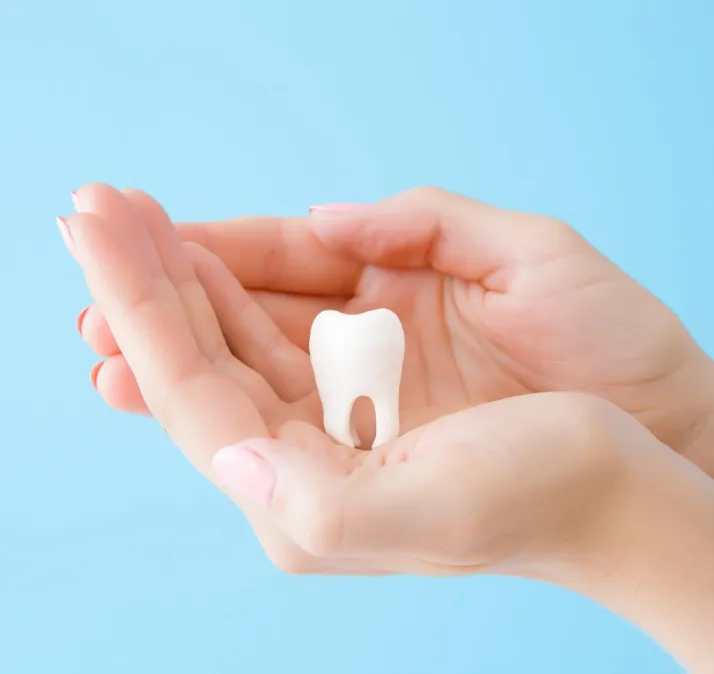
- A cavity to repair in the hollow of a molar: In this case, we use what is called an inlay, a restoration that sits deep in the tooth. It fills the grooves and the spaces where bacteria could lodge again. It is made from impressions (traditional or digital) and cemented into the cavity.
- A wide cavity to treat on the top of a molar: We place a surface restoration, also called an onlay. It rebuilds the raised part of a tooth damaged by decay while filling the space the bacteria occupied. This type of restoration is also custom-made to blend in with the natural teeth.
A restoration with many uses

Inlays are therefore an alternative to fillings that is sometimes needed to repair a decayed tooth. They can also be used when a filling has broken or come loose and the exposed cavity needs to be filled. This ceramic restoration fills the space more solidly and durably, which also keeps bacteria from getting inside the tooth and causing more damage. In the same way, an inlay can be used to close a tooth after a root canal treatment.
CEREC inlays: simple, strong and attractive
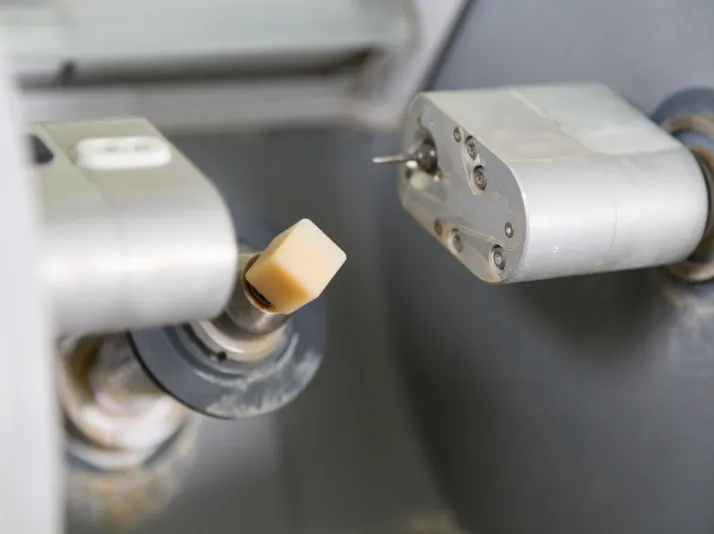
At Centre Dentaire Ethier & Nadeau, we offer CEREC inlays, made with CAD/CAM technology (computer-aided design, computer-aided manufacturing). In practical terms, the restoration is first designed with ultra-precise software, then milled by a computerized robot from a preformed ceramic block. This means you can have a high-strength, natural-looking inlay in a single appointment!