

How does a cavity form?
Put simply, a cavity is a bacterial infection that takes the form of a hole, more or less wide and deep, in a tooth. It forms when bacteria gather on a tooth surface, which happens when they find sugary residue there to feed on. As they consume it, these microbes multiply and produce acidic waste that can break through the enamel, letting them gradually work their way into the tooth. A cavity starts in the enamel (the protective layer of the teeth), but it can reach further stages if it is not given the care it needs.
Cavities at different stages
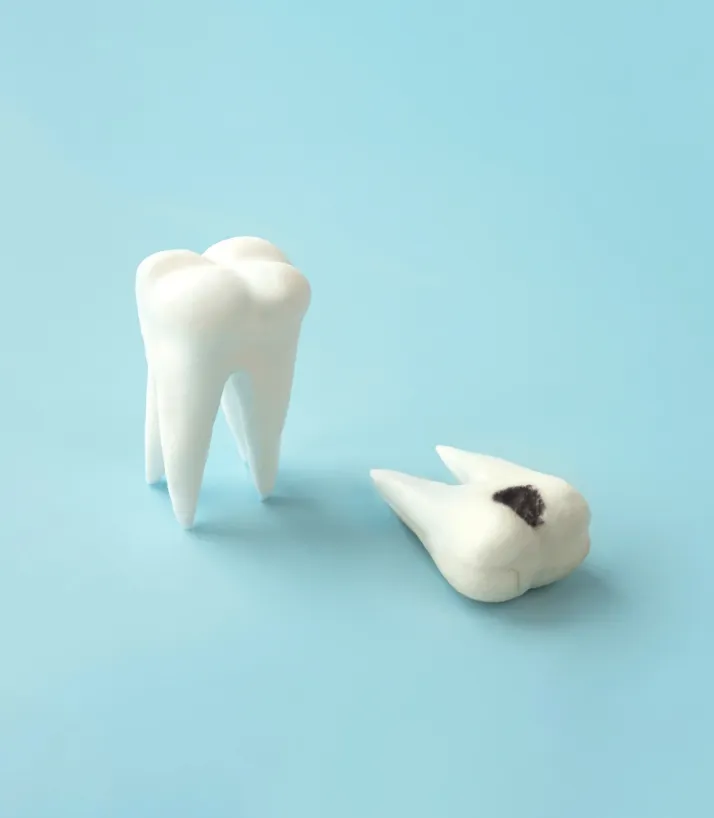
- An early cavity: It is just starting to develop and only affects the enamel. Since the bacteria have not reached the sensitive parts of the tooth, it usually causes no symptoms and looks like a small black spot. A dental exam is needed to find it.
- A moderate cavity: The bacteria have progressed and reached the dentin, the bulk of the tooth under the enamel. It then causes sensitivity to hot or cold, or even mild pain. A filling is usually enough to treat it, but an inlay is sometimes needed.
- A deep cavity (pulpitis): At this point, the infection has reached the pulp (the centre of the tooth, which contains the blood vessels and nerves). It often causes marked pain and requires a root canal treatment to stop it. Without proper care, the infection could reach the root or turn into an abscess.
Treating cavities at the clinic
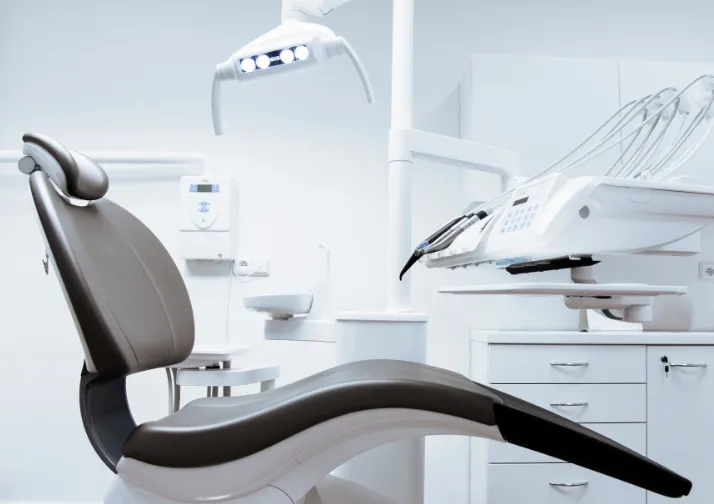
Cavities are treated under local anesthesia. During the procedure, the dentist first drills out the decayed area to remove the bacteria that caused it. The cavity is then filled with an amalgam or composite filling that protects the tooth against further bacterial attack. When the cavity is deeper or wider, or has weakened the tooth, a ceramic inlay is used to repair it instead.
Cavities: why prevention matters

Although cavities are fairly simple to treat, it is always better to avoid them. To do so, keep up a good oral hygiene routine, limit your sugar intake and see your dentist in Saint-Eustache regularly for preventive care. Cleaning helps control the bacteria that cause cavities and weaken the enamel. The exam lets your dentist find cavities at their earliest stages, which makes them easier to treat.